
 Russian
 Armenian
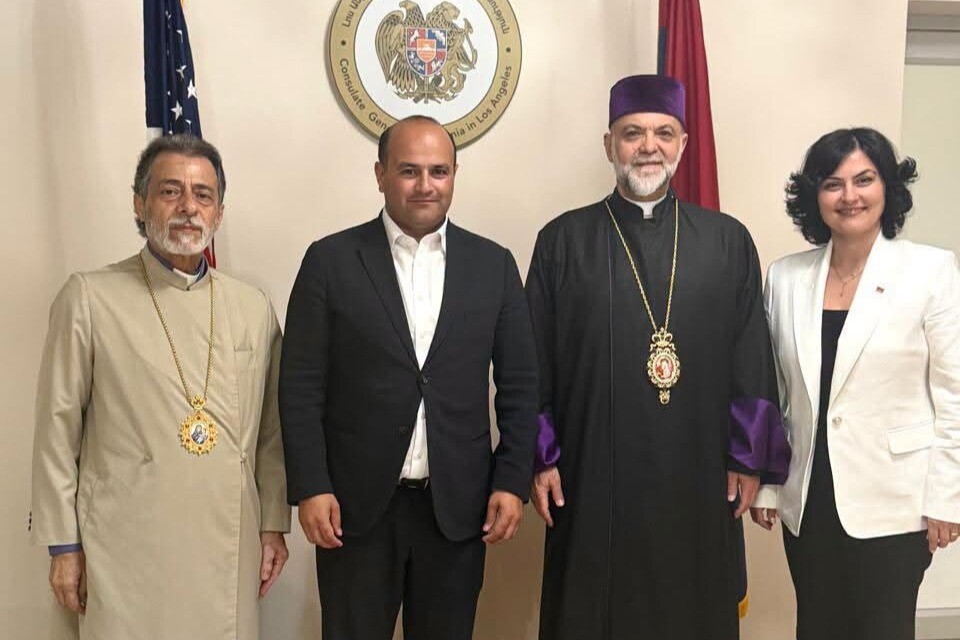
On a recent visit to Los Angeles, the Armenian Ambassador to the United States, Varuzhan Nersesyan, engaged in a significant dialogue with prominent leaders of the Armenian church community. This meeting, which took place at the Armenian Apostolic Church, served as a platform to address various issues affecting the Armenian diaspora and to explore collaborative efforts aimed at strengthening community ties.
During the meeting, Ambassador Nersesyan emphasized the importance of the Armenian church as a cornerstone of Armenian identity and culture, particularly for those living outside of Armenia. He acknowledged the vital role that church leaders play in fostering community cohesion and preserving Armenian heritage in the diaspora. The discussions included strategies for enhancing the church's outreach and support for community members, especially the youth.
Key figures present at the meeting included Archbishop Hovnan Derderian, the Primate of the Western Diocese of the Armenian Church of North America, and other influential clergy members. Their insights and experiences provided a rich context for the discussions, as they shared the challenges faced by the community, including issues of integration, cultural preservation, and the need for spiritual guidance.
The ambassador's visit comes at a time when the Armenian community in Los Angeles is navigating complex social and political landscapes. With a significant population of Armenians residing in the area, the church remains a central institution for many, offering not only religious services but also social and educational programs. The meeting underscored the necessity of collaboration between the Armenian government and church leaders to address these challenges effectively.
One of the key topics discussed was the ongoing need for support and resources for Armenian youth. The church leaders highlighted the importance of engaging younger generations in cultural and religious activities to ensure the continuity of Armenian traditions. Ambassador Nersesyan expressed his commitment to facilitating programs that would empower youth and encourage their involvement in both the church and the broader community.
Furthermore, the meeting provided an opportunity to discuss the recent developments in Armenia and the impact of these events on the diaspora. The ambassador informed the church leaders about the government's efforts to strengthen ties with Armenians abroad and to promote a unified national identity. This dialogue is crucial as it fosters a sense of belonging and connection among Armenians living outside their homeland.
As a result of this meeting, both the ambassador and church leaders expressed a desire to continue their collaboration. They agreed to establish regular communication channels to ensure that the needs of the community are addressed promptly. This proactive approach is essential for maintaining the vibrancy of the Armenian community in Los Angeles and ensuring that its cultural heritage is preserved for future generations.
In conclusion, the meeting between Ambassador Nersesyan and Armenian church leaders in Los Angeles marks a significant step towards strengthening the relationship between the Armenian government and its diaspora. By addressing community issues and fostering collaboration, both parties aim to enhance the support available to Armenians living abroad, ensuring that they remain connected to their roots and culture.