
 Russian
 Armenian
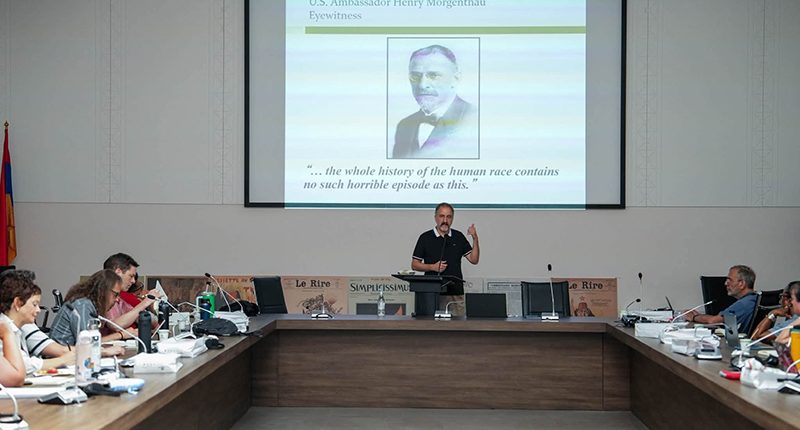
In a significant educational initiative, a group of American teachers has traveled to Yerevan, Armenia, to participate in a program dedicated to the Armenian Genocide. This program, organized by the Armenian Genocide Museum-Institute, aims to equip educators with the knowledge and resources necessary to teach this critical aspect of Armenian history in their classrooms back in the United States.
The teachers engaged in a series of lectures, workshops, and discussions led by historians and experts on the Armenian Genocide. These sessions provided deep insights into the historical context of the genocide, its impact on the Armenian community, and the ongoing efforts to promote recognition and education about this tragic event. Participants were encouraged to reflect on the importance of teaching history accurately and sensitively, especially in relation to issues of human rights and genocide.
One of the key aspects of the program was the emphasis on the role of education in preserving memory and fostering understanding. By learning about the Armenian Genocide, the teachers are expected to return to their schools with a renewed commitment to educating their students about the importance of tolerance, empathy, and historical awareness. This is particularly relevant in today's world, where discussions about human rights and historical injustices are increasingly pertinent.
In addition to classroom instruction, the program included visits to significant historical sites in Armenia. Participants toured memorials and museums that commemorate the victims of the genocide, allowing them to connect the historical narrative with real places and stories. This experiential learning component is crucial for educators, as it helps them convey the emotional weight of the events to their students.
The program not only serves to educate American teachers but also strengthens ties between the Armenian and American communities. By fostering relationships and understanding between cultures, the initiative aims to create a network of educators who can advocate for the inclusion of Armenian history in American curricula. This is especially important given the ongoing struggles for recognition of the Armenian Genocide in various political and educational contexts.
As these educators return to their respective schools, they will be armed with new resources and perspectives that can help them advocate for a more inclusive and accurate portrayal of history. The hope is that their experiences in Armenia will inspire them to lead discussions and projects that promote awareness of the Armenian Genocide and its implications for contemporary society.
Overall, this educational program represents a vital step in the ongoing effort to ensure that the Armenian Genocide is remembered and taught. It highlights the importance of cross-cultural educational initiatives and the role of teachers in shaping future generations’ understanding of history and human rights issues. As more educators participate in such programs, the impact on student awareness and advocacy for justice and recognition can be profound.