
 Russian
 Armenian
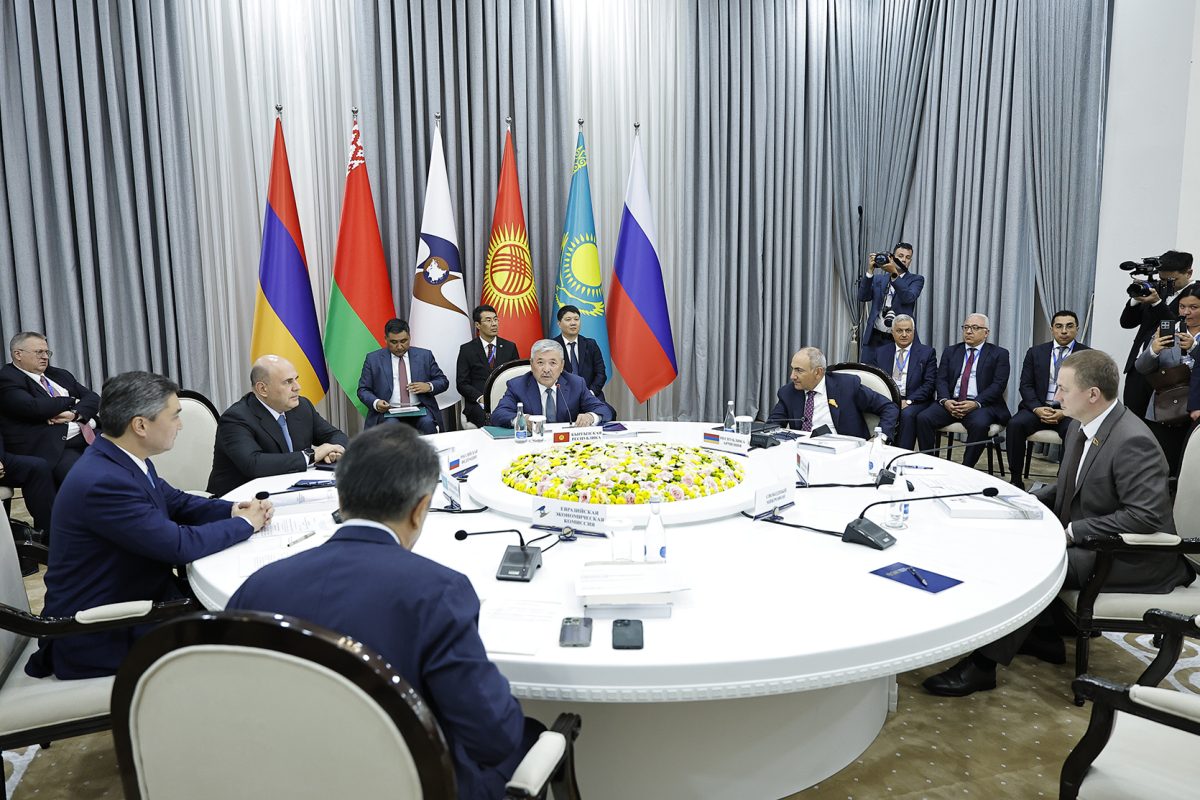
Armenian Prime Minister Nikol Pashinyan recently attended a narrow-format session of the Eurasian Intergovernmental Council held in Cholpon-Ata, Kyrgyzstan. This gathering brought together the leaders of several member states to discuss key issues related to regional cooperation and economic integration. The meeting was hosted by Adylbek Kasymaliev, the Chairman of the Cabinet of Ministers of Kyrgyzstan, who welcomed the prime ministers and facilitated the discussions.
During the session, the prime ministers engaged in dialogue about various topics, including trade relations, economic development strategies, and collaborative projects that could benefit the member countries. The importance of strengthening ties among the Eurasian Economic Union (EAEU) member states was emphasized, as it plays a crucial role in enhancing economic stability and growth in the region.
Prime Minister Pashinyan's participation is significant for Armenia, as it underscores the country's commitment to regional integration and cooperation. Armenia has been navigating its relationship with the EAEU, balancing its membership with its aspirations for closer ties with the European Union and other international partners. This meeting provided an opportunity for Pashinyan to reaffirm Armenia's position within the EAEU framework.
The session also included discussions on addressing challenges faced by member states, such as economic disparities and trade barriers. By collaborating on these issues, the leaders aim to create a more unified economic landscape that can withstand external pressures and foster growth. The outcomes of this meeting could have lasting implications for Armenia's economic policies and its approach to regional partnerships.
In addition to economic discussions, the meeting served as a platform for the prime ministers to engage in informal exchanges, strengthening personal relationships that can facilitate future cooperation. The importance of these personal connections cannot be understated, as they often lead to more effective negotiations and collaborative efforts in the long run.
As the meeting concluded, the leaders posed for a family photo, symbolizing their unity and shared goals. The visual representation of camaraderie among the member states is a reminder of the collective efforts required to address regional challenges and promote mutual interests.
Looking ahead, it will be essential for Armenia to actively participate in the initiatives discussed during the session. Continued engagement in the EAEU could provide Armenia with economic benefits and enhance its influence in regional matters. The outcomes of this meeting will likely be monitored closely by analysts and policymakers, as they could shape the future trajectory of Armenia's economic and diplomatic strategies.