
 Russian
 Armenian
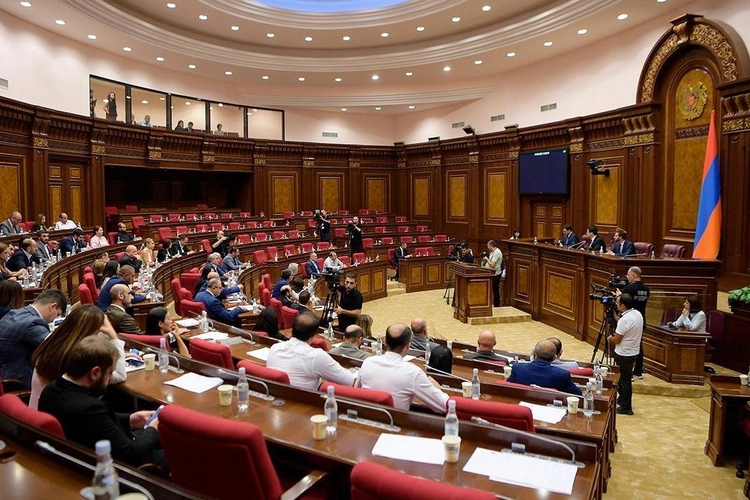
In a recent election, Armenian Prime Minister Nikol Pashinyan emerged victorious, solidifying his position in the government. However, the election results revealed that his party did not secure a constitutional majority, which could complicate governance and policy-making in the coming months. This outcome is particularly significant given the ongoing tensions between Armenia and Azerbaijan, especially regarding the disputed regions that have historically been points of conflict.
Pashinyan's party, the Civil Contract, won a plurality of votes but fell short of the majority needed to enact constitutional changes without the support of opposition parties. This situation may lead to challenges in implementing his agenda, especially as he navigates the complex political landscape that includes both domestic issues and international relations. The lack of a strong majority could also embolden opposition parties to challenge his policies more aggressively.
The backdrop to this election is marked by a series of conflicts and negotiations between Armenia and Azerbaijan, particularly over the Nagorno-Karabakh region. The ceasefire agreement brokered in 2020 ended a 44-day war but did not resolve the underlying issues, leading to ongoing skirmishes and diplomatic tensions. Pashinyan's government has faced criticism for its handling of these issues, and the election results may reflect a divided electorate on how best to approach relations with Azerbaijan.
As Pashinyan continues to lead, the risk of renewed conflict with Azerbaijan looms large. Analysts suggest that without a strong mandate, his ability to negotiate effectively with Azerbaijan may be compromised. The situation is further complicated by Azerbaijan's increasing military assertiveness and its claims over territories that Armenia considers integral to its sovereignty.
The implications of this election are significant for the Armenian-American community, as many members have a vested interest in the stability and security of Armenia. The diaspora has historically supported Armenia through advocacy and humanitarian efforts, and the current political climate may prompt renewed engagement as the community seeks to influence U.S. policy towards Armenia and the South Caucasus region.
Looking ahead, Pashinyan's government will need to focus on building coalitions within the parliament to ensure effective governance. Additionally, diplomatic efforts will be crucial in managing relations with Azerbaijan and preventing further escalations. The international community, particularly powers like Russia and the United States, may play a role in facilitating dialogue between the two nations to prevent a return to armed conflict.
In conclusion, while Pashinyan's reelection may provide some continuity in leadership, the lack of a constitutional majority poses challenges that could affect both domestic governance and international relations. The Armenian-American community will be closely watching developments, as the outcomes of these political dynamics will have lasting implications for Armenia's future and its relationship with the diaspora.