
 Russian
 Armenian
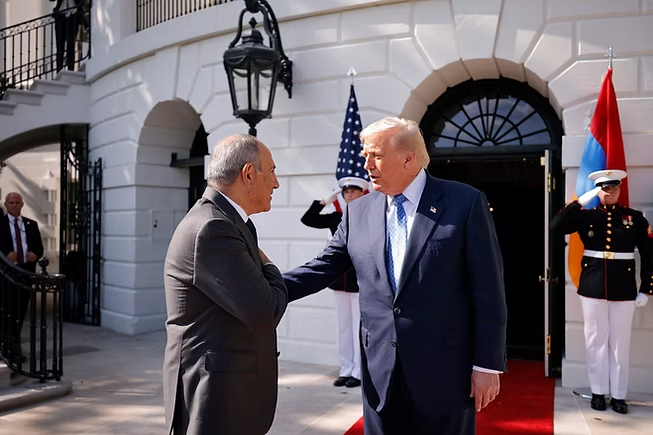
In a surprising move ahead of Armenia's parliamentary elections scheduled for June 7, U.S. President Donald Trump has publicly endorsed Prime Minister Nikol Pashinyan. This endorsement comes at a crucial time for Pashinyan, who has been navigating a complex political landscape since the 2020 Nagorno-Karabakh conflict. Trump's support is seen as a significant boost for Pashinyan's campaign, which aims to solidify his leadership and continue his reform agenda.
Pashinyan, who rose to power in 2018 following a peaceful revolution, has faced numerous challenges, including economic recovery and ongoing tensions with Azerbaijan over the Nagorno-Karabakh region. The endorsement from Trump not only highlights the importance of U.S. support for Armenia but also reflects a strategic interest in maintaining stability in the South Caucasus. The U.S. has historically been involved in the region, promoting democratic governance and economic development.
The relationship between the U.S. and Armenia has been evolving, especially under Pashinyan's leadership. His government has sought to strengthen ties with Western nations while balancing relations with Russia, which has traditionally been Armenia's ally. Trump's endorsement may signal a commitment from the U.S. to further engage with Armenia, particularly in light of recent geopolitical developments.
For Armenian-Americans and the broader Armenian diaspora, this endorsement is particularly relevant. Many in the community are keenly aware of the political dynamics at play in Armenia and how they affect their homeland. The diaspora has been active in advocating for U.S. support for Armenia, especially in the aftermath of the 2020 conflict, and Trump's public backing could energize these efforts.
As the election approaches, Pashinyan's campaign is likely to leverage this endorsement to rally support among voters. His administration has focused on anti-corruption measures, economic reforms, and strengthening democratic institutions, which resonate with many citizens who seek stability and progress. However, the opposition has criticized his handling of the post-war situation, and the endorsement may also intensify the political discourse leading up to the elections.
Looking ahead, the outcome of the elections will be pivotal for Armenia's future. If Pashinyan secures a victory, it could lead to a continuation of his policies and further alignment with Western nations. Conversely, a loss could shift the political landscape significantly, potentially affecting U.S.-Armenia relations. The Armenian community in the U.S. will undoubtedly be watching closely, as the implications of this election extend beyond Armenia's borders.
In conclusion, Trump's endorsement of Pashinyan is a noteworthy development in the context of Armenia's upcoming elections. It underscores the importance of international relations in domestic politics and highlights the ongoing support from the U.S. for democratic processes in Armenia. As the election date approaches, both local and diaspora communities will be keenly observing how these dynamics unfold.